Free Boiler Replacement for Disabled People
Boiler Upgrade Scheme Guide ·
Free Boiler Replacement for Disabled People: What Actually Qualifies You
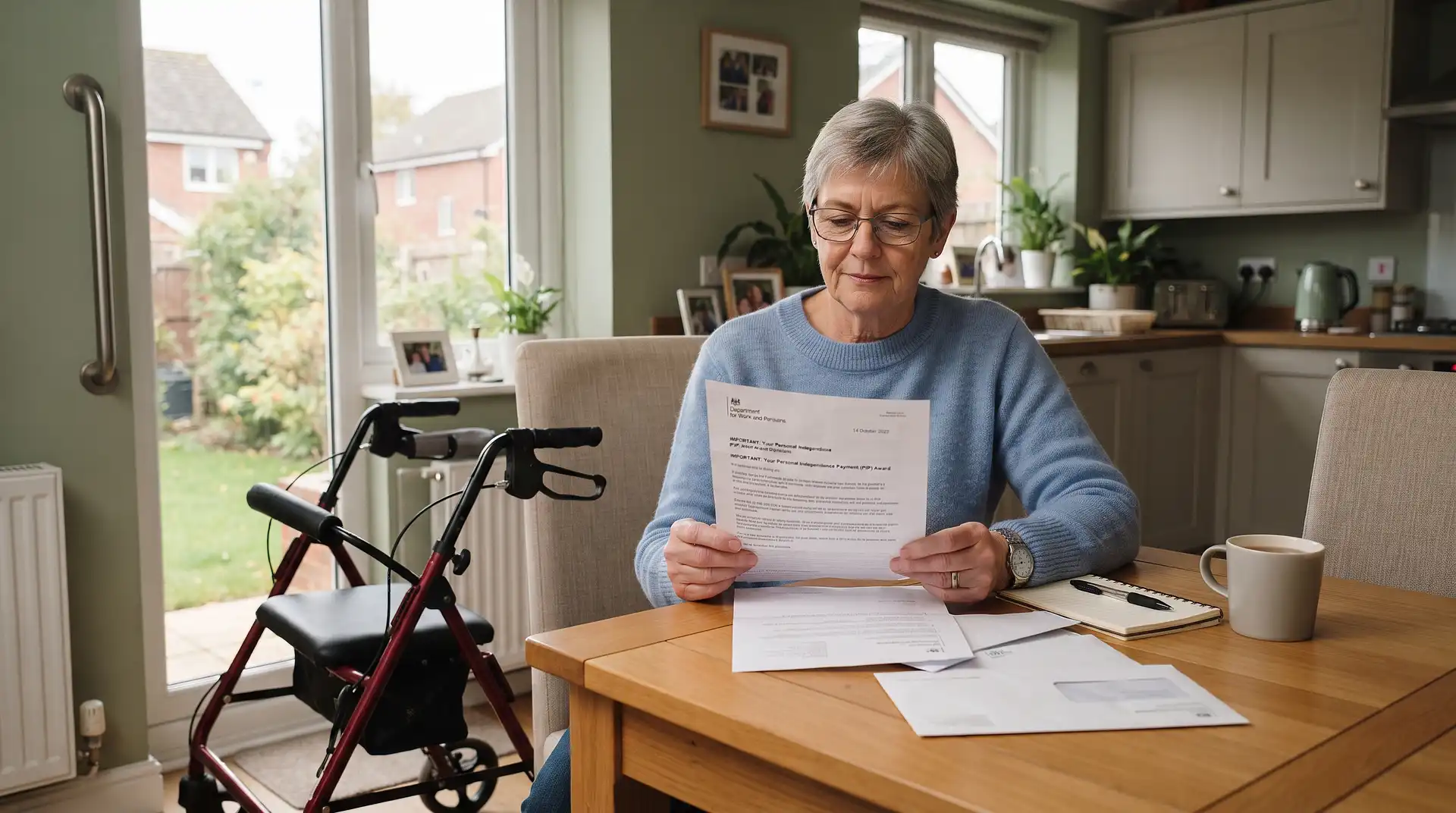
If you have searched for information about free boilers for disabled people, you have likely come across claims that Personal Independence Payment, Disability Living Allowance, or Attendance Allowance alone will get you a fully funded boiler through ECO4. This is not accurate, and a surprising amount of content online repeats this claim regardless. Understanding what actually qualifies you protects you from wasted applications and, more importantly, from callers using this misinformation to target vulnerable households.
Important: InstantGrant is an independent grant information and application-support service. We are not the UK government, Ofgem, or the DWP. All figures on this page are verified against Ofgem's current ECO4 delivery guidance as of 12 September 2026. Be especially cautious of any caller claiming your disability benefit alone guarantees a free boiler; this is a common misrepresentation used in cold-calling.
This guide explains exactly why PIP, DLA, and Attendance Allowance do not qualify you on their own, what genuinely does qualify a disabled household, the LA Flex vulnerability route, and the separate Disabled Facilities Grant that many guides confuse with ECO4 entirely.
Why PIP, DLA, and Attendance Allowance Don't Qualify You Alone
ECO4 replaced the earlier ECO3 scheme's benefit-based eligibility list with a different approach focused on household income and property energy efficiency rating. Under ECO3, PIP and similar disability benefits were included in the qualifying list, but this changed when ECO4 launched, because these benefits are not means-tested and are paid based on the impact of a health condition rather than household income or savings. This is precisely why receiving PIP, DLA, Attendance Allowance, Severe Disablement Allowance, or Industrial Injuries Disablement Benefit alone, without also receiving one of the current qualifying benefits, does not make a household eligible for ECO4 in its own right.
What Actually Qualifies a Disabled Household
If You Also Receive a Qualifying Benefit
Many disabled people do also receive a genuinely qualifying benefit alongside their disability-specific payment, and it is this second benefit, not the disability benefit itself, that unlocks ECO4 eligibility. The current qualifying benefits are Universal Credit, Pension Credit, Income-Related Employment and Support Allowance, Income-Based Jobseeker's Allowance, Income Support, Child Tax Credit, Working Tax Credit, and Housing Benefit. If you receive PIP alongside Universal Credit, for example, it is the Universal Credit that makes you eligible, alongside your property having an EPC rating of D, E, F, or G.
Income-Related ESA Specifically
Income-related Employment and Support Allowance is worth calling out separately, since it is genuinely disability-connected and does qualify for ECO4 on its own, provided it is the income-related version rather than contribution-based ESA. Many disabled people already receive this specific benefit, which is a legitimate and direct route into ECO4 without needing a second qualifying benefit alongside it.
The LA Flex Route: Disability as a Vulnerability Factor
If you do not receive a qualifying benefit, your local council's LA Flex route can still refer you into ECO4 using disability or a chronic health condition made worse by cold housing as a genuine vulnerability factor, alongside criteria such as household income below a set threshold or living in a deprived area. This route exists specifically for situations where someone's health circumstances create real need that the standard benefit list does not capture, and contacting your council's energy or housing team directly to ask about Flex referral is the right next step if this applies to you.
The Disabled Facilities Grant: A Different Scheme Entirely
Several guides blur the Disabled Facilities Grant together with ECO4, but these are genuinely separate schemes with different purposes. The Disabled Facilities Grant, administered by your local council, provides up to £30,000 in England or £36,000 in Wales for accessibility-related home adaptations, such as ramps, stairlifts, or bathroom modifications, and is assessed based on need rather than income for children, though means-tested for adults. Heating-related work is not its primary purpose, but where a heating system upgrade is directly connected to an assessed disability need, it may be considered as part of a DFG application, separately from any ECO4 route.
The Priority Services Register: Worth Registering For Separately
Regardless of which funding route applies to you, registering for your energy supplier's Priority Services Register is worth doing if you have a disability or long-term health condition, since it entitles you to additional support such as advance notice of planned power cuts, priority reconnection, and accessible communication formats. This is free to join and separate from any grant scheme, but it is frequently mentioned in the same breath as boiler grants, so it is worth understanding as its own distinct benefit.
Common Misconceptions
"I get PIP, so I automatically qualify for a free boiler." No. PIP alone does not qualify you for ECO4. You need to also receive a genuinely qualifying benefit such as Universal Credit or Pension Credit, or income-related ESA specifically, which does qualify on its own.
"DLA and Attendance Allowance work the same way as PIP for this." Correct in the sense that none of these disability-specific benefits qualify you for ECO4 alone. The same rule applies across all three.
"The Disabled Facilities Grant will give me a free boiler." Not directly. The DFG funds accessibility adaptations and is assessed against disability need, not primarily boiler replacement, though heating-related adaptations may sometimes be included where directly connected to your needs.
Frequently Asked Questions
Does PIP qualify me for a free boiler through ECO4? No, not on its own. PIP is not a qualifying benefit for ECO4. You would need to also receive a qualifying benefit such as Universal Credit, Pension Credit, or Housing Benefit, or receive income-related Employment and Support Allowance specifically, which does qualify independently.
Does DLA or Attendance Allowance qualify for a free boiler? No, not alone. These disability-specific benefits are not on ECO4's current qualifying benefit list, though many recipients also receive a genuinely qualifying benefit alongside them.
What if I only receive a disability benefit and nothing else? Contact your local council about the LA Flex route, which can refer disabled households based on vulnerability even without a qualifying benefit, provided you meet the council's specific criteria.
Is the Disabled Facilities Grant the same as a free boiler scheme? No. The DFG is a separate scheme funding accessibility adaptations, administered by your council, worth up to £30,000 in England or £36,000 in Wales. It is not primarily designed for boiler replacement.
Why do so many websites say PIP qualifies for a free boiler? Many guides online have not been updated since ECO4 replaced ECO3 in 2022, when disability benefits like PIP genuinely did qualify. This information is now outdated and should not be relied on.
How InstantGrant Can Help
Understanding whether your specific combination of benefits genuinely qualifies you for ECO4, or whether the LA Flex or Disabled Facilities Grant routes fit your situation better, can be difficult given how much outdated information exists on this topic. InstantGrant is an independent grant information and application-support service that can help you understand your actual position before you apply anywhere.
We are not the UK government, Ofgem, or the DWP. We do not award grants and we do not guarantee any outcome.
Check your eligibility at instantgrant.co.uk