What Is Replacing the ECO4 Scheme
ECO4 Guide ·
What Is Replacing the ECO4 Scheme? The Honest Picture for 2027
There is no ECO5. The government confirmed in its January 2026 response to a supply chain consultation that ECO4 will not be replaced by another phase of the Energy Company Obligation, bringing an end to the supplier-obligation funding model that has run in various forms since 2013. What replaces it instead is the Warm Homes Plan, a fundamentally different approach where the government funds home upgrades directly through grants rather than legally obligating energy suppliers to pay for them.
Important: InstantGrant is an independent grant information and application-support service. We are not the UK government, DESNZ, or Ofgem. All figures on this page are verified against DESNZ's published consultation response and Technical Annex as of 12 September 2026. Several websites still incorrectly state that ECO4 closed in March 2026; it remains open until 31 December 2026.
This guide explains exactly why there is no ECO5, what the Warm Homes Plan actually replaces ECO4 with, the structural difference between how the two schemes are funded, the genuine funding timing gap worth knowing about, and what to do if you currently qualify for ECO4.
Why There Is No ECO5
DESNZ ran a consultation between August and September 2025, receiving 215 responses from suppliers, installers, consumer groups, and local authorities, on whether to extend ECO4's original March 2026 closing date. The government's response, published 23 January 2026, confirmed the extension to 31 December 2026, but explicitly stated this was to give the supply chain time to complete existing delivery targets, not to introduce new ones. The response also confirmed there would be no successor supplier obligation in the ECO format, meaning the funding model that has driven insulation and heating upgrades in Great Britain for over a decade is being retired rather than renewed.
What the Warm Homes Plan Actually Replaces It With
The Warm Homes Plan, published 21 January 2026, commits £15 billion of public investment over this Parliament, aiming to upgrade up to 5 million homes by 2030. Structurally, this is a genuinely different mechanism from ECO4: where ECO4 required energy suppliers to fund upgrades as a legal obligation with households applying through their supplier, the Warm Homes Plan funds upgrades through direct government grants, with households applying via local authorities rather than energy companies. The two main strands currently live are the Warm Homes: Local Grant, for lower-income households with an EPC rating of D to G, and the Warm Homes: Social Housing Fund, for registered social landlords.
What's New Compared to ECO4
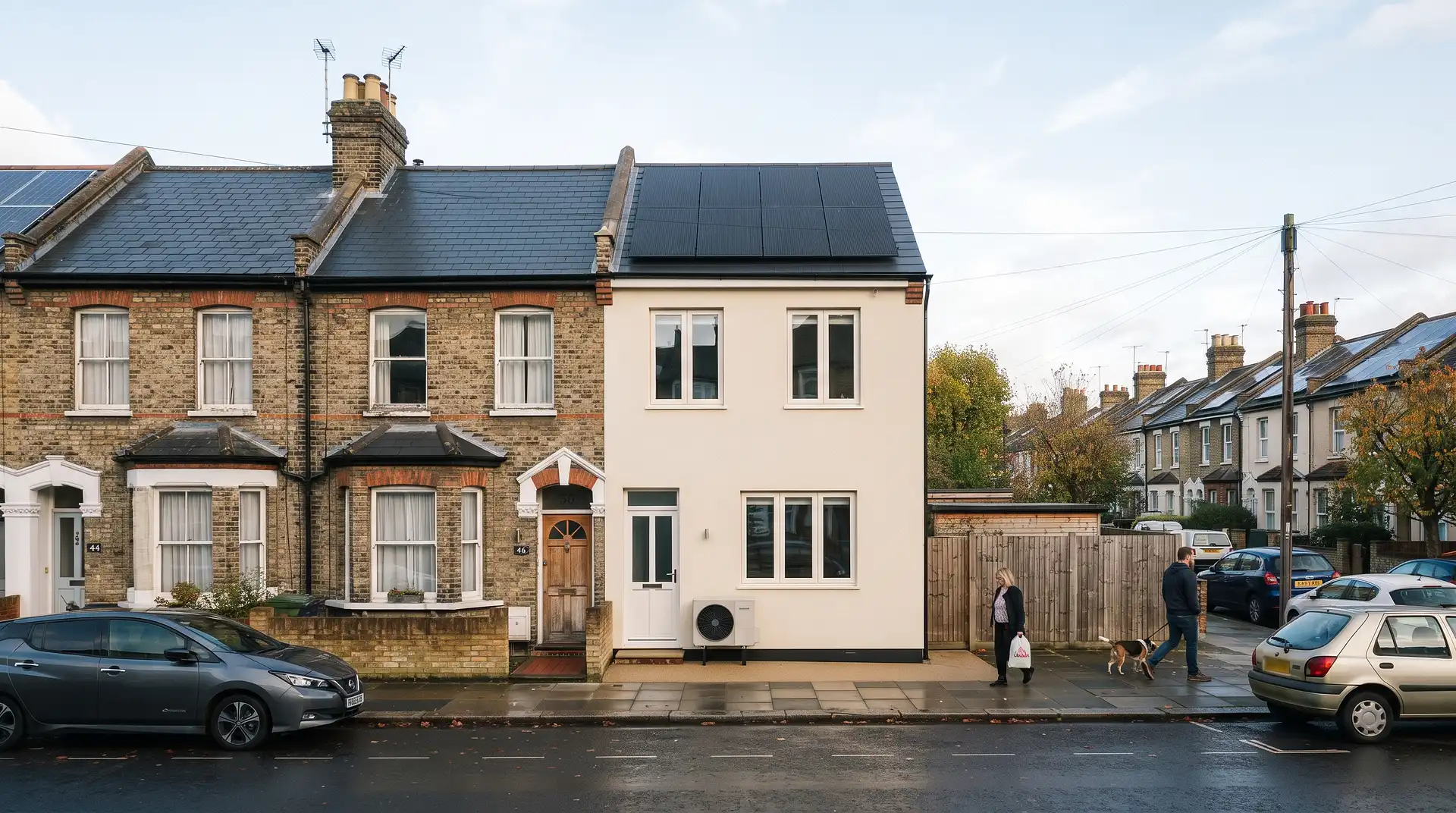
Solar panels and battery storage were largely excluded from ECO4-funded packages, but both are included as eligible measures under the Warm Homes Plan's Local Grant strand, alongside the insulation and heating measures ECO4 also covered. The eligibility approach has also changed from a strict benefits requirement to an income threshold, currently around £36,000, which the government estimates will bring roughly 1 million households per year into scope, a considerably wider net than ECO4's benefit-based criteria.
The Funding Gap Most Guides Don't Mention
This is the detail that gets lost in most coverage of the ECO4-to-Warm-Homes-Plan transition. DESNZ's Technical Annex, published alongside the January 2026 announcement, states that an additional £1.5 billion in capital delivery funding committed to the Warm Homes Plan is planned to begin "from 2027/28 onwards," not immediately when ECO4 closes. For households who qualify for the existing Warm Homes: Local Grant today, this timing is not a practical concern, since that scheme is already live. But for anyone assuming a like-for-like replacement scheme will simply switch on the moment ECO4 ends on 31 December 2026, the honest picture is that some of the promised expanded funding does not begin until the following financial year, creating a genuine window where support may be less comprehensive than either scheme suggests on its own.
What This Means If You Currently Qualify for ECO4
If you receive a qualifying benefit and your property has an EPC rating of D to G, applying for ECO4 now remains the lower-risk option compared to waiting for the Warm Homes Plan's criteria to fully settle, particularly given ECO4's confirmed 10 to 18 week processing time and its hard closing date. The Warm Homes: Local Grant's criteria have not been published in full for every local authority, and DESNZ itself has acknowledged a transition period in early 2027 when new applications will move to a different process, so households with a live ECO4 route available to them today are generally better served acting now rather than waiting.
What This Means If You Don't Qualify for ECO4
If you are not on a qualifying benefit, the Warm Homes: Local Grant, based on the £36,000 income threshold rather than specific benefits, is worth checking regardless of whether you were ever eligible for ECO4, since its broader criteria may now capture your household where ECO4's stricter benefit rules did not. The Boiler Upgrade Scheme also remains a separate, unaffected route for anyone considering a heat pump regardless of income, since it sits outside both the ECO4 and Warm Homes Plan funding structures entirely.
Common Misconceptions
"ECO4 has already closed." Not yet. Several websites incorrectly state a March 2026 closure date, which was the original plan before the government extended it. ECO4 remains open until 31 December 2026.
"The Warm Homes Plan is just ECO4 rebranded." No. The funding mechanism is fundamentally different: ECO4 was a supplier obligation, while the Warm Homes Plan is direct government grant funding delivered through local authorities.
"As soon as ECO4 ends, the full replacement funding starts immediately." Not entirely. While the Warm Homes: Local Grant is already live, an additional £1.5 billion in capital funding specifically committed to this transition is not scheduled to begin until the 2027/28 financial year.
Frequently Asked Questions
What is replacing the ECO4 scheme? There is no ECO5. The Warm Homes Plan, a direct government grant programme delivered mainly through the Warm Homes: Local Grant and Warm Homes: Social Housing Fund, replaces the supplier-obligation model ECO4 used.
When does ECO4 actually close? 31 December 2026. Some sources incorrectly state March 2026, which was the scheme's original closing date before the government extended it in January 2026.
Is there a gap in funding between ECO4 ending and its replacement starting? Potentially, for some households. The Warm Homes: Local Grant is already live, but an additional £1.5 billion in capital funding committed to the transition is not scheduled to begin until the 2027/28 financial year.
Should I apply for ECO4 now or wait for the Warm Homes Plan? If you currently qualify for ECO4, applying now is generally the lower-risk option given the scheme's processing times and confirmed closing date, rather than waiting for the Warm Homes Plan's full criteria to settle.
Does the Warm Homes Plan cover solar panels? Yes. Unlike ECO4, which largely excluded solar, the Warm Homes: Local Grant includes solar panels and battery storage as eligible measures alongside insulation and heating.
How InstantGrant Can Help
Understanding whether to act on ECO4 now or wait for the Warm Homes Plan's criteria to fully settle depends on your specific circumstances and timing. InstantGrant is an independent grant information and application-support service that can help you understand your position before you decide which route to pursue.
We are not the UK government, DESNZ, or Ofgem. We do not award grants and we do not guarantee any outcome.
Check your eligibility at instantgrant.co.uk