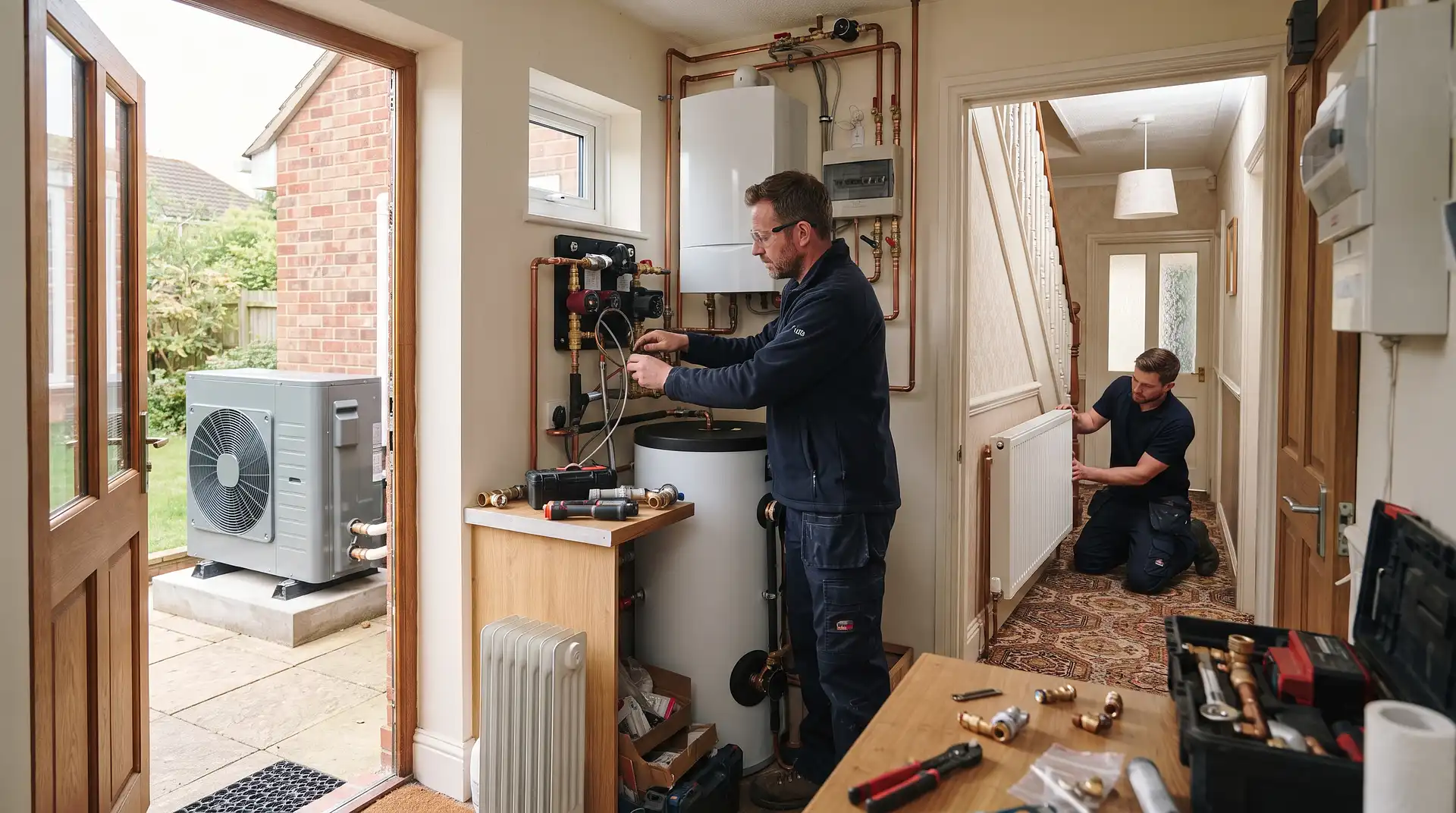
Replace a Boiler With a Heat Pump
ECO4 Guide ·
Replacing a Boiler With a Heat Pump: Costs, Grants and What Changes
You can replace a gas, oil, LPG or electric boiler with a heat pump. Most UK homes use an air to water system for this conversion. The work may also include a hot water cylinder, new controls, radiator upgrades and changes to the existing pipework.
InstantGrant is an independent grant information and application support service. We are not a government department, grant funder or heating installer. Funding depends on your property, location, existing heating system and the rules in force when you apply.
About This Guide
This guide explains the practical work involved when replacing a boiler with a heat pump. It covers suitability, radiators, hot water, installation costs and the grants available across the UK in 2026.
Can You Replace a Boiler With a Heat Pump?
Yes. An air to water heat pump can normally replace a boiler because it supplies warm water to a central heating system. That water passes through radiators or underfloor heating in much the same way as water heated by a boiler.
The main difference is how the system operates. A boiler produces very hot water for short periods. A heat pump usually supplies water at a lower temperature and runs for longer. The system must therefore be designed around the heat loss of the property rather than simply matching the output shown on the old boiler.
A proper conversion starts with room by room heat loss calculations. These calculations tell the installer how much heat each room requires and whether the existing radiators can provide it.
Feature | Boiler system | Air to water heat pump |
|---|---|---|
Heat source | Gas, oil, LPG or electricity | Outside air and electricity |
Heating pattern | Shorter periods at a higher temperature | Longer periods at a lower temperature |
Outdoor equipment | Flue or fuel tank may be required | Outdoor heat pump unit required |
Hot water | A combi boiler can heat water instantly | A suitable hot water cylinder is usually required |
Radiators | Often designed for hotter water | Some radiators may need to be larger |
Which Type of Heat Pump Can Replace a Boiler?
Air to Water Heat Pump
An air to water heat pump is the most common choice for replacing a boiler. It takes heat from the outside air and transfers it into water for radiators, underfloor heating and a hot water cylinder.
This option is suitable for many houses that already have a wet central heating system. You can learn more about equipment, space and expected performance in our air source heat pump guide.
Ground Source Heat Pump
A ground source heat pump uses buried pipes to collect heat from the ground. It can replace a boiler and provide both heating and hot water. However, installation normally costs more and requires enough land for ground loops or suitable access for boreholes.
Air to Air Heat Pump
An air to air heat pump delivers warm air through indoor units. It does not normally use existing radiators and most systems do not provide domestic hot water. A separate solution may therefore be needed for showers, baths and hot taps.
Air to air systems can work well in smaller homes, flats and properties without a wet central heating system. They can also provide cooling when installed and operated correctly.
What Changes When You Replace a Combi Boiler With a Heat Pump?
A combi boiler produces hot water when a tap is opened. Most air to water heat pumps do not work in this way. They usually heat and store water in an insulated cylinder.
Your installer will calculate the appropriate cylinder size from the number of occupants, bathrooms and normal hot water use. The cylinder may be placed in an airing cupboard, utility room, loft or another suitable area.
You May Need a Hot Water Cylinder
Finding space for a cylinder is one of the first practical checks for a combi boiler conversion. The installation may also require new pipe routes between the heat pump, cylinder and heating system.
A suitable immersion heater is commonly included as a backup and for high temperature hot water cycles. Ask whether the cylinder, immersion heater, valves and controls are included in your quotation.
Some Radiators May Need to Be Larger
Existing radiators do not always need to be replaced. A radiator can stay if it provides enough heat at the proposed water temperature.
Rooms with small radiators may need larger models, double panel radiators or another suitable emitter. Underfloor heating can also work efficiently with a heat pump because it uses a large surface area.
Your Heating Controls Will Change
A heat pump normally works best when it maintains an even indoor temperature. Constantly switching it on and off like an old boiler can reduce comfort and efficiency.
Your new system may use weather compensation, room controls and a different heating schedule. The installer should explain these controls before completing the work.
Check Whether Heat Pump Funding May Be Available
Tell InstantGrant about your property, current boiler and household circumstances. We can help you identify relevant funding routes before you arrange an installation.
Check Your Grant Eligibility
Will Your Existing Radiators and Pipes Work?
Many homes can keep at least part of their existing heating system. The decision should be based on measurements and calculations rather than assumptions.
Radiator Assessment
The installer should calculate the heat required in every room and compare it with the output of each radiator at the proposed operating temperature. A radiator that worked with a boiler may produce less heat when supplied with cooler water.
You should receive a clear list showing which radiators will stay and which ones will change. Ask for this information before accepting a quote.
Pipework Assessment
Existing pipes may be suitable if they are in good condition and can carry the required water flow. Small bore or microbore pipework requires careful assessment, but its presence does not automatically mean that the whole system must be replaced.
The installer should check pipe sizes, system resistance, water flow and the condition of older pipework. Any required changes should appear in the written system design and quotation.
What Happens to the Old Boiler and Gas Connection?
The old boiler is normally disconnected and removed as part of the conversion. The installer should also make safe any unused heating pipes, flue openings and electrical connections.
If you still use gas for cooking or another appliance, the gas supply may remain active. If the heat pump removes your final gas appliance, you can ask your energy supplier or local gas network about removing the meter and closing the connection.
Homes changing from oil or LPG should ask whether removal of the fuel tank is included. Draining, cleaning and removing an old tank may be charged separately.
How Much Does It Cost to Replace a Boiler With a Heat Pump?
A typical air to water heat pump conversion may cost around £12,000 to £15,000 before funding. A simple installation can cost less, while a large or difficult property can cost more.
The final price depends on the heat pump size, cylinder, pipework, electrical work, radiator upgrades, access and treatment of the old heating equipment.
Possible item | What affects the cost |
|---|---|
Heat pump and outdoor unit | Required output, product specification and installation position |
Hot water cylinder | Household size, available space and hot water demand |
Radiators | Number and size of radiators that need upgrading |
Pipework | Condition, diameter, layout and required water flow |
Electrical work | Existing consumer unit, cable route and system requirements |
Boiler or tank removal | Equipment type, access and safe disposal requirements |
Request at least two or three detailed quotations. A low headline price is difficult to compare if it excludes radiators, electrical work, the cylinder or removal of the old system.
Can You Get a Grant to Replace a Boiler With a Heat Pump?
Funding depends on where you live and the heating system being replaced. The main support in England and Wales is the Boiler Upgrade Scheme.
Boiler Upgrade Scheme in England and Wales
Eligible property owners can receive £7,500 towards an air to water or ground source heat pump. An air to air heat pump can receive £2,500 under the current rules.
Until 31 March 2027, eligible homes without a mains gas connection may receive £9,000 for an air to water or ground source heat pump when replacing oil or LPG heating.
The grant is normally deducted from the installation price. An approved installer applies for the voucher and receives the grant payment after completing an eligible installation.
The scheme does not fund a hybrid system that keeps a fossil fuel boiler as part of the main heating arrangement. Read our guide explaining how to apply for the Boiler Upgrade Scheme before accepting an installation contract.
Other Funding Routes
Some lower income or vulnerable households may receive support through supplier or council schemes. Available measures depend on the home assessment, local delivery arrangements and funding remaining.
UK nation | Possible support | Important point |
|---|---|---|
England | Boiler Upgrade Scheme and eligible household energy schemes | Support may depend on ownership, income, heating type and property condition |
Wales | Boiler Upgrade Scheme and the Welsh Government Nest scheme | Nest uses household and property eligibility rules |
Scotland | Home Energy Scotland Grant and Loan and Warmer Homes Scotland | Homeowners may receive up to £7,500 as a heat pump grant, with additional support in eligible rural areas |
Northern Ireland | Local energy efficiency programmes when funding is available | The Boiler Upgrade Scheme does not operate in Northern Ireland |
How the Boiler to Heat Pump Conversion Works
Initial property check: The installer reviews the current heating system, energy use, insulation, available space and electrical supply.
Room by room heat loss calculation: The required heat output is calculated for each room.
System design: The installer selects the heat pump, cylinder, radiators, pipe sizes and controls.
Grant assessment: Your installer checks whether the proposed system and property meet the funding rules.
Installation: The old boiler is disconnected, the heat pump is fitted and required heating system changes are completed.
Commissioning: Water flow, controls, temperatures and system performance are checked.
Handover: You receive instructions, certificates, warranty details and maintenance information.
How Long Does Installation Take?
A straightforward air source heat pump installation commonly takes several working days. A period of three to seven days is a useful planning estimate, but complex work can take longer.
You may be without heating or hot water during part of the installation. Ask the installer how long services will be unavailable and whether temporary arrangements are needed.
Planning, grant approval, equipment delivery and installer availability can make the complete process longer than the work inside the property.
Will a Heat Pump Reduce Your Energy Bills?
A heat pump can reduce energy use because it moves existing heat rather than creating all its heat directly from electricity. However, lower energy use does not automatically guarantee a lower bill.
Your result depends on the efficiency of the installed system, electricity tariff, previous fuel, indoor temperature and how the controls are used. A well designed system is more important than choosing the largest available heat pump.
Before accepting a quote, ask for the expected seasonal efficiency, estimated annual electricity use and the assumptions behind the calculation. Compare this estimate with your present annual gas, oil, LPG or electricity use.
When Might Replacing a Boiler With a Heat Pump Be Difficult?
A heat pump can work in many property types, including older homes, but some conversions require extra preparation. Possible difficulties include:
No practical location for an outdoor unit
Limited space for a hot water cylinder
Extensive heating pipework problems
High room heat loss that has not been addressed
Planning or listed building restrictions
A quotation that excludes necessary radiator or electrical work
These issues do not always prevent an installation. They should be identified during the survey so that the design and price reflect the actual work required.
Questions to Ask Before Accepting a Heat Pump Quote
Has a room by room heat loss calculation been completed?
What outdoor design temperature was used?
What flow temperature is the system designed to use?
Which radiators will stay and which will be replaced?
Will any pipework need to change?
Is a hot water cylinder included?
Does the price include removal of the boiler, flue or fuel tank?
What electrical work is included?
What grant has been deducted from the quotation?
What seasonal efficiency and annual electricity use are expected?
Which warranties and maintenance services are included?
Safety and Grant Application Guidance
For the Boiler Upgrade Scheme, use an appropriately certified installer and make sure the grant discount appears clearly on your quotation and invoice. Read the current Ofgem guidance for property owners before giving consent for an application.
Do not pay someone who claims that approval is guaranteed. Be careful with unexpected calls, pressure selling and requests for banking passwords. A legitimate installer should provide written company details, a system design, a complete quotation and clear cancellation terms.
Frequently Asked Questions
Can I replace my gas boiler with an air source heat pump?
Yes. An air to water heat pump can replace a gas boiler and supply radiators and hot water. The property should first receive a heat loss calculation and heating system assessment.
Can a heat pump use my existing radiators?
Some existing radiators may be suitable. Each radiator should be checked against the heat required by the room at the proposed water temperature. Small radiators may need to be upgraded.
Do I need a hot water cylinder when replacing a combi boiler?
You will normally need a suitable hot water cylinder for an air to water heat pump. Most heat pumps do not provide instant hot water in the same way as a combi boiler.
Can I keep my boiler as a backup?
Keeping a fossil fuel boiler as part of a hybrid heating system can affect grant eligibility. The Boiler Upgrade Scheme does not currently provide a grant for a hybrid heat pump system.
Is every home suitable for a heat pump?
Many homes are suitable, but the system must be designed correctly. Outdoor space, heat loss, radiators, pipework, cylinder space and electrical supply should all be assessed.
How much is the heat pump grant in 2026?
The standard Boiler Upgrade Scheme grant in England and Wales is £7,500 for an eligible air to water or ground source heat pump. Eligible off gas grid homes replacing oil or LPG may receive £9,000 until 31 March 2027.
Should I improve insulation before installing a heat pump?
Useful insulation improvements can reduce heat loss and may allow a smaller system to heat the property. Your survey should identify practical improvements, but do not accept unnecessary work without a clear explanation of its effect on the design.
Find Out Whether You Could Replace Your Boiler With a Funded Heat Pump
InstantGrant can help you check relevant schemes based on your location, property and current heating system. Eligibility and funding are always subject to assessment.